
Reception
Picnic baskets
Put two groups together and say how many altogether.
Talk about it: Which number did you start from?
Reception to Year 2 · Free
Free games that build adding one step at a time: putting groups together, counting on, then making ten to add across it. Every question is read aloud.

Quick answer
Children first put two groups together and count them all. Next they count on from the bigger number. Then they use facts they know, such as bonds to 10, to add without counting: 8 + 5 is 8 + 2 + 3, which is 13. Each step builds on the one before.
Games
Three steps, from Reception to Year 2. Every question is read aloud, and each game ends with something to talk about.
Stories and pictures first: two groups put together, or some more arriving, with no symbols yet.
Put two groups together and say how many altogether.
Talk about it: Which number did you start from?
Follow "first, then, now" stories where some come or go.
Talk about it: What happened in the story?
Reading number sentences, and counting on from the bigger number.
Read and build +, − and = sentences that match a picture or story.
Talk about it: Where is the whole in the sentence?
Add within 20 by counting on from the larger number.
Talk about it: Why start at the bigger number?
Solve one-step story problems to 20.
Talk about it: Can you draw the story?
Using bonds to 10 to add across ten without counting.
Add and subtract across 10 by making ten.
Talk about it: How many did you move to make ten?
Add three one-digit numbers, looking for a ten.
Talk about it: Why add the ten first?
Making ten needs quick bonds to 10. If children count on their fingers to find them, practise those first.
Teaching tips
Adding makes sense when it starts with stories and objects. These five ideas help at each step.
"Three ducks, then two more swim over." Acting out stories with toys gives adding a meaning before any symbols.
To add 2 + 9, start at 9 and count on 2. Children who always start from the first number do extra work.
Use two ten frames. Fill the first, then see what is left: 8 + 5 becomes 10 + 3.
Say 3 + 4 = 7 as "three add four equals seven". Ask what each number means in the story.
Show 7 = 3 + 4 as well as 3 + 4 = 7. The equals sign means "is the same as", not "the answer comes next".
Print and play
Free A4 PDFs that print well in black and white. Each one goes with a game, so children can carry on with real objects.
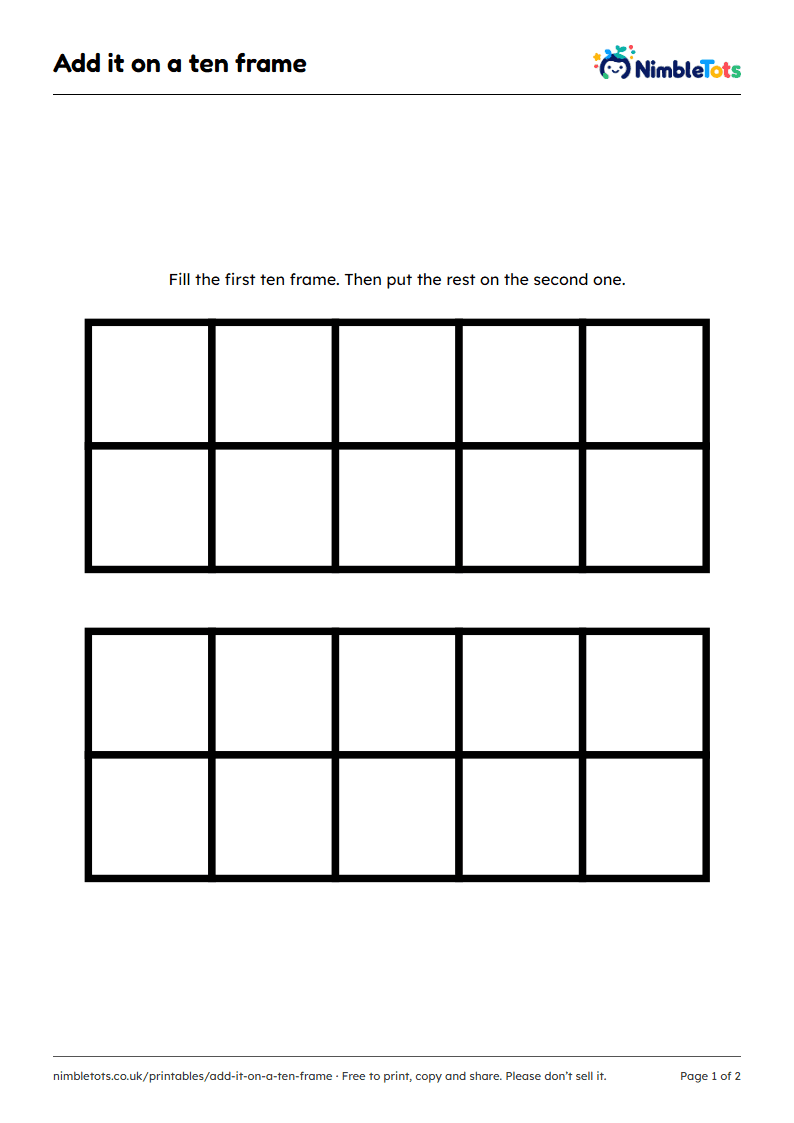
PDF · 2 A4 pages · Year 1, Year 2
A double ten frame mat and six sums that cross ten. Children fill the first ten frame, then count what is left over: 8 + 5 is 8 + 2 + 3, so 13.
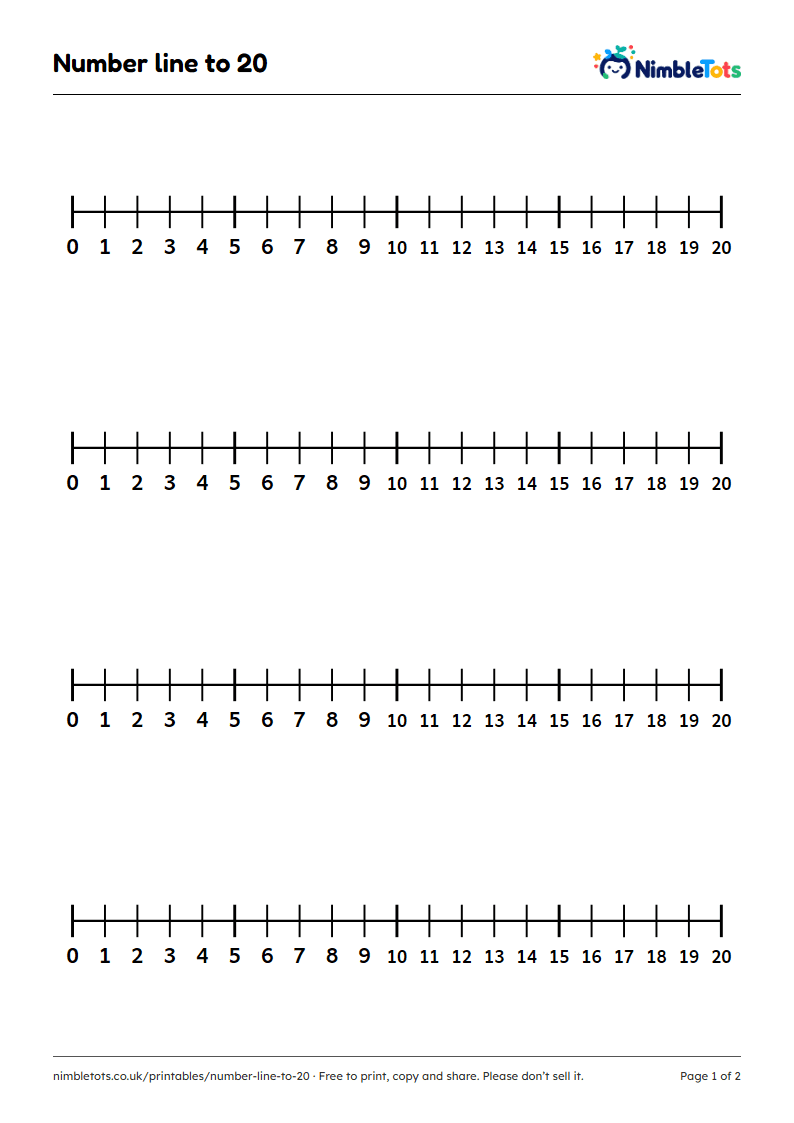
PDF · 2 A4 pages · Year 1
Number lines from 0 to 20 to cut out, and a page of sums to solve by counting on. Start at the bigger number and draw the jumps along the line.
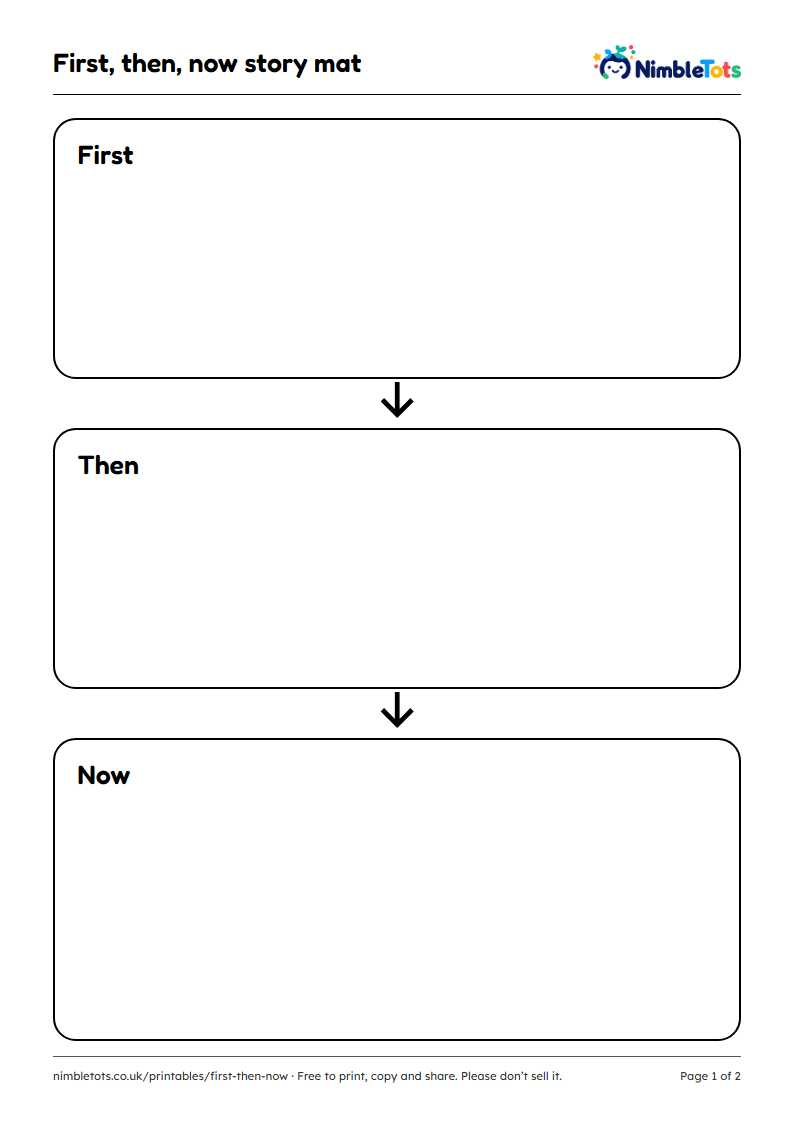
PDF · 2 A4 pages · Reception, Year 1
A story mat with three boxes, First, Then and Now, and six short stories to read aloud. Act each story out with toys to see adding and taking away.
For teachers
The statements in their own words, with the games that practise each one.
| What children learn | Where it comes from | Games |
|---|---|---|
| Have a deep understanding of numbers to 10, including the composition of each number. | EYFS Early Learning Goal: Number | Picnic baskets, First, then, now |
| Read, write and interpret mathematical statements involving addition (+), subtraction (−) and equals (=) signs. | National Curriculum, Year 1 | Which sentence? |
| Add and subtract one-digit and two-digit numbers to 20, including 0. | National Curriculum, Year 1 | Count on frog |
| Add and subtract across 10, for example: 8 + 5 = 13, 13 − 5 = 8. | Ready-to-progress 2AS-1, Year 2 | Fill the ten first, Find the ten |
Year 1 children read and write number sentences with +, − and =, add and subtract numbers to 20, and solve simple story problems with objects and pictures.
Yes, at first. Fingers show the numbers clearly and help with counting on. As children learn bonds and doubles, they use fingers less and facts more.
Stories with toys, board games with a dice, and short games like these. Ask how they worked it out as well as the answer.
Free, read aloud and ready in seconds. No sign-up.